Thursday, 25 November 2010

Grated–Sated–Eight-ed!

The Double Down Latke Sandwich

It’s almost Chanucah so it’s time for more self-indulgence than self-recrimination.

Back in Britain – and the United States - it’s also time for latkes (deep fried potato cakes) but  here in Israel, it’s doughnuts or go very hungry for a week.

In fact, having an instinctive dislike of deep-frying, I’m more than a mite miffed that I’ve not yet seen oven-ready button sized frozen latkes available in Israeli supermarkets like those provided as a Jewish alternative to oven-ready chips by the UK kosher foods manufacturer, Rakusen.

What’s more, as I’m also fed up with “cat’s-in-the-cupboard” jokes – native-Hebrew speakers haven’t a clue to what this alludes -  I’m ringing the changes with this latke recipe - a spoof version of Kentucky Fried Chicken’s ‘Double Down Chicken Sandwich’!

PhotoThe deliciously decadent  ingredients include smoked salmon (‘lox’) but as a sea-green vegetarian I suggest that a ripe avocado may substitute very well and that other vegetables like broccoli or swede may be used instead of potato.

There’s also a great idea in the method: The potatoes are kept white by being grated directly into water and then wrung out  in a kitchen tea towel. The video makes the process look like a tug-of-war but again I suggest that a “ricer” may be just as effective – what’s more it requires far less effort!

Double Down Latke Sandwich

Ingredients:

1 pound potatoes
1/2 cup finely chopped onion
2 cloves garlic, smashed
1 large egg, lightly beaten
1 tablespoon flour or matzo meal (optional)
1/2 teaspoon salt
freshly ground pepper
grape seed, olive or peanut oil
lox (smoked salmon)

crème fraiche or sour cream
chives or green onion, chopped
chopped lettuce, optional

Instructions:

Preheat oven to 250 deg., F 120 deg., C.

Peel potatoes and coarsely grate directly into a large bowl of cold water.

Soak potatoes one – two minutes after last batch is added to water, then drain well in a colander.

Spread grated potatoes, garlic and onion on a kitchen towel, roll up and wring out as much liquid as possible.

Transfer potato mixture to a bowl and stir in egg and salt.  If it’s too runny add a little flour or matzo meal.  Too dry add a little bit more egg.

Heat a large frying plan. Add enough oil to cover the bottom plus a bit more. Get the oil hot but not smoking. Use a spoon to add potato mixture into pan, spreading with the back of the spoon into 3 or 4-inch rounds.

Reduce heat to moderate and cook until undersides are very well browned, about 5 minutes. Turn latkes over and cook until undersides are very well browned, about 5 minutes more.  You want walnut brown, not beige.

Transfer to paper towels to drain and season with salt. Add more oil to skillet as needed.

Keep latkes warm on a wire rack set in a shallow baking pan in oven.

To make the Double Down, spread crème fraiche on one side of a latke, pile on lox and onions, spread some crème fraiche on another latke, then make into a sandwich.

------------

Good or what?

Other Foodaism fans have written variously and thus:

    ‘… Personally I blame my ancestors for the cholesterol problem …’
     ’ … Excuse me while I barf. Also, it’s difficult enough to find non-kosher creme fraiche, but kosher? I don’t think it exists in the US …’

‘… This is hilarious AND looks fabulous! ….’

    With thanks to Rob Eshman, Jay Firestone and gang from Jewish Journal and the Foodaism team.

    msniw

    Tuesday, 16 November 2010

    Turning Full Circle With Those Family Rings

    Article first published as http://technorati.com/lifestyle/family/article/turning-full-circle-with-those-family/Turning Full Circle with Those Family Rings on Technorati.

    Royal.Engagement.RingWell it happens in families! Learning that Prince William proposed to Kate Middleton with his late mother’s ring reminded me of my own solemn but utterly pleasurable duty when my niece and nephew-in-law announced their  engagement in London.

    I was unable to attend the ultra-Orthodox Jewish celebrations but delivered – by special courier from Manchester – my own mother’s engagement and eternity rings as it had been her earnest wish that her beloved granddaughter should have them.

    The timing could not have been better as my niece went on to have thLeora.Sam.Bennettem remodelled respectively into an engagement ring and earrings in time for her chuppah (Jewish wedding) and was still showing them off months later at the special  party following the birth and circumcision of her first born son.

    But back to Wills and Kate: News of their engagement was also wonderfully timed. No wonder it was greeted with much thumping of the table at Government Cabinet level.

    A glorious Royal marriage is something  the beleaguered British populace may anticipate with relish.

    I’m sure I’m not the only one to believe that the young couple’s romance has already lasted longer than many marriages largely because they’re both sensible, stable, mature - and anxious to make their relationship work.

    Furthermore, it is obvious that Prince William is desperate for the secure and steady home life denied him and his brother during their parents’ troubled marriage.

    Now I’m probably talking heresy when I suggest that while  Kate Middleton has a smashing figure and wonderful clothes-sense she is not stunningly pretty.

    She has something far more important: She exudes what we term in Yiddishised Hebrew as innate ‘chein’ – a charming grace which glows from every photograph and which I’m sure will win her as many hearts as the late Princess of Wales.

    Moreover, I guess that the nuptials will be somewhat understated compared to the Royal romps of the 80s. This would echo the post-war wedding enjoyed by the Queen and Prince Philip and be in line with with the U.K.’s economically straitened circumstances.

    After all as I write, Prince William is only second-in-line to throne and not the immediate heir as was (and is!) Prince Charles when he married the former Lady Diana Spencer in 1981.

    But none of this matters. If my husband and I are an example, the British ex-pat community in Israel is every bit as happy and excited about the news as everyone else worldwide.  Mazeltov!


    msniw

    Friday, 12 November 2010

    Two more murdered in Israel’s culture of road deaths


    ISRAEL.ROAD.CARNAGEDay after miserable day, the toll of deaths and injuries on Israel’s roads grows apace. But you read of them only when the incident is particularly dramatic or they involve a celebrity.

    The latest horror saw off two young IDF soldiers: Staff Sergeant Ayman Kayzal (possibly ‘Kayzel Iman’) died outright while Lieutenant Michal Zohar died of later from head injuries.

    I feel personally moved by Michal’s passing because her best friend  is the granddaughter of one of my lovely new acquaintances in Karmiel.

    The incident happened late on Thursday when a truck ploughed into a crowd waiting at a bus station in Acco (‘Acre’). At least 11 others were also hurt in what police believe was a deliberate attack.

    Haaretz.com reported:

    “Three more of the injured were in a critical condition and had been transferred to nearby Nahariya for treatment, paramedics said. Police arrested the truck driver, a local father of three aged 45, as he tried to flee the scene in his vehicle, which was halted when security guards from the neighbouring train station fired pistols at the truck's wheels.

    The driver later admitted intentionally crashing the truck before refusing to see a lawyer, police said.

    “Members of his family who gathered outside the police station where he was being held said he had a history of psychological problems.

    “Acco has frequently been a flashpoint for violence between Arab and Jewish communities who share the northern coastal city, and police quickly removed the arrested man from the scene, fearing an outbreak of mob violence.

    “But there was no apparent nationalist or racist motive for the attack, which they were not treating as a terror incident, police said. The driver appeared to have been distressed by a family dispute, although it was unclear what what led him to launch the attack”.

    The Jerusalem Post reported that the driver was identified as 45-year-old Gabriel Hen whose remand was extended until November 21.

    “Police in the North have said Hen, a Jewish resident of Acco told detectives during questioning that he deliberately rammed his truck into the bus stop.

    “’The Shin Bet [Israel Security Agency] and the police killed my kid,’ the suspect told police during interrogation, when asked to explain his actions.

    “A subsequent police check revealed that the man has two children, both of whom are alive and well. Police said the background to the attack remained unclear.

    “After the incident, the driver fled the scene on foot, and got as far as a kilometre before being arrested by police.

    “The incident was attended by senior police, including Northern police district head, Commander Shimon Koren who told reporters there that the driver had left a trail of carnage, colliding with vehicles before crashing into a bus stop.

    The J.P.’s statistics prove that more than 330 people have been killed on Israel’s roads during 2010 but I’m bound to say that the Israel Ministry of Transport and Road Safety, for all its huffing and puffing, simply doesn’t treat the situation seriously.

    I’m forever riding  on buses driven recklessly or bad-temperedly. On Motze’i Shabbat (Saturday evening) last weekend our driver into town chatted on his mobile phone for the entire journey while one afternoon this week another driver stopped our bus in the middle of the road to intervene in an altercation among a group of young passengers.

    If my own family is any guide, the general feeling is that it’s matter of culture; that terrorism is treated much more seriously than road safety and that the necessary money is not set aside to tackle the issue.

    I’m beginning to think they are right. Let’s examine what happened at the Knesset’s “National Day for Personal Responsibility for Road Safety”:

    Nurit Grossman of the Anashim Be'Adom action group says – my interpretation – that on the day she and her organisation were treated with disdainful contempt by transport ministers.

    Grossman received an Award for a Citizen Advancing Road Safety on behalf of her group but the politicians and civil servants departed after making self-congratulatory, self-aggrandising speeches and before the awards were made!

    I quote from her speech at Anashim Be’Adom’s own recent annual conference:

    “The reception in the Knesset was very appropriate, but we were disappointed by the ceremony itself. The Minister of Transport and Road Safety, and the Minister of Communications complimented each other and themselves – and then left the hall before the presentations.

    “And apparently no time was left for the prize winners to make their speeches. We have sent both our thanks and our recommendations to the National Authority for Road Safety for next year's ceremony, which include holding the awards presentation at the beginning ( it is either a sign of contempt or a lack of respect for the Minister of Transport and Road Safety and other Ministers to leave once they have made their own speeches).

    “It is also important for the Ministers at least once a year to hear what the public think of their performance, in particular from those who give much of themselves in the cause of Road Safety”.

    msniw

    Tuesday, 9 November 2010

    IF YOU SEE HER – CONTACT THE POLICE!

    Jackie.BuyherUntil a half-hour ago, I had never heard of, let alone seen a photograph of this lovely young girl. But my heart missed a beat when I saw it and then read the accompanying message on Facebook.

    So, although I am never likely to talk with, let alone meet her mother, Rachel, I’m reposting the appeal in the hope that someone who knows Jackie Buyher will see her and ask her to contact Rachel, who begged: 

    “PLEASE CROSSPOST...URGENT! My daughter, Jackie Buyher, has been missing from the... northwest side of Evansville, Indiana, USA since Wednesday, November 03.  She is 16 years old, about 5' 6" tall, sandy brown hair (straight, shoulder length), hazel eyes, and weighs approximately 120 lbs. Friends that I am in contact with, as well as school officials, have not seen her since that day. A missing person's report has been filed with the Evansville Police Dept., and recently has expanded to a nation-wide alert. If anyone has seen her, or think they may know her whereabouts, please dial 911 and report any information you may have to the Evansville Police Department.

    Why should I react like this? Well, I am human and what’s more I’m meeting young adults like Jackie every week at a school in Karmiel, Israel.

    All have so much to offer and life has much to give them in return but at their age we all think we’re immortal. It just ain’t so! Meanwhile, let’s hope that this story has a happy ending. I’ll let you know.

    msniw

    Saturday, 30 October 2010

    Lucky For Some

    Green Fingers for a Lucky Bamboo

    We’d only just arrived in Karmiel and our delightful white-walled flat was almost bare.

    How could I begin to cheer it up before our shipment arrived from the U.K.?

    A florist in Rabin named “Bucket” (yeah, it took me a couple of weeks to work it out!) came to the rescue with a pretty miniature ‘Lucky Bamboo’ decorated with pebbles in an attractive dark pink glass pot.

    But only a few weeks later, the lovely leaves began to yellow. Had the plant had too much sun? No. It sits in a shady spot on the breakfast bar.

    Had it been overwatered? I don’t think so.

    However, it had been watered with ordinary tap water and I should have used the spring or filtered variety.

    Now read the experts:

    “As millions of "lucky" consumers around the world have discovered, Lucky Bamboo makes the perfect house or office plant.

    “It needs little care - only about an inch of water and little direct sunlight to keep it happy and thriving...

    “What is ‘Lucky Bamboo’?

    “Known for centuries as Lucky Bamboo, the plant is not a bamboo  (botanical name: Dracaena) but a resilient member of the lily family that grows in the dark, tropical rainforests of Southeast Asia and Africa.

    “How Much Care Does Lucky Bamboo Need?

    “Keep water fresh by changing it every week, and always keep water levels at approximately an inch from the base of the canes. Lucky Bamboo prefers plenty of indirect sunlight and room temperatures at 65-70o.

    “Although opinions differ on feeding, your Lucky Bamboo is a living organism, so it makes sense to  add a mild solution to the water occasionally such as African Violet fertilizer. Since growth can be controlled by feeding, small amounts of fertilizer will keep the plant at a manageable size.


    “Why Are the Leaves Turning Yellow?

    Two of the most common factors are:

    “1.) Too much direct sunlight

    “2.) Too salty or heavily-fluoridated tap water. Give your new Lucky Bamboo a thriving start be sure to keep it away from direct sunlight, and water only with filtered or natural spring water.

    “Why Is It Called "Lucky" Bamboo?

    “Along with its ease of growth, Lucky Bamboo has long been associated with the Eastern practice of Feng Shui - or the bringing of natural elements of water, fire, earth, wood and metal into balance within the environment. Lucky Bamboo is believed to be an ideal example of the thriving wood and water element, with the addition of a red ribbon sometimes tied around the stalks - which is believed to "fire" the positive flow of energy or chi in the room.

    “The number of stalks also has meaning : three stalks for happiness; five stalks for wealth; six stalks for health. Four stalks, however, are always avoided since the word "four" in Chinese sounds too similar to the Chinese word for "death"!

    “Can I Take Cuttings from Lucky Bamboo?

    Lucky Bamboo

    “Yes. New stalks can be propagated from the original plant by using a sharp knife to cut through a stalk - just below the joint. Place the cutting in fresh, clean water. A fine mist spray to stalks is sometimes suggested to stimulate new bud growth.

    “How Do I Re-pot Bamboo?

    “Like any other houseplant, Lucky Bamboo can be transferred to a vase or pot two inches larger than the original, or planted permanently into a loose sand or soil mixture that provides lots of bottom drainage. To avoid root rot, be careful to let the top of the soil dry out between waterings.

    msniw

    Saturday, 23 October 2010

    My Neighbourhood Named For Yitzhak Rabin

    The original name for my neighbourhood in Ramat.Rabin.01Karmiel was a very flowery

    " רמת טללים" - 'Dewy Heights'. 

    Ramat.Rabin.02. It was changed to 'Ramat Rabin' after the assassination 15 years ago, of Prime Minister Yitzchak Rabin. The Hebrew calendar date of his death - 12 Cheshvan 5756 -  was marked earlier this week while the secular  anniversary is 04 November.


    Itzhak RabinRabin's official portrait will feature on the home pages of the entire 'Perfectlywrite' series, up to and including the secular anniversary of his passing.
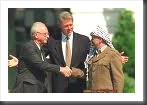
    Meanwhile, our elegant,  modern neighbourhood began life in 1998 with a target population of 10,000. Twelve years on, it has become one of the most sought-after areas in this beautiful north Galilean city and building, much of it clad in imitation of traditional 'oolite' ('Jerusalem stone'), continues even as I write.

    At the official memorial ceremony for Rabin held at Mount Herzl, Jerusalem earlier this week, President Shimon Peres - once Rabin's co-Prime Minister - called for differences to be solved democratically.Y.Rabin

    He also eulogised the assassinated Nobel Peace Prize laureate, commemorating his contribution to the nation and the untimely nature of his death.

    "We will not forget that you were murdered. You were murdered by an evil man who planned to kill the nation's spirit," Peres said, addressing Rabin.

    "Your legacy, Yitzhak, was the contribution of a statesman truly leading  a nation: not to look back in rage, but forward with faith. You earned the faith of a nation".


    Y.Rabin.03On Tuesday night, several thousand youngsters gathered at Tel Aviv’s Kikar Rabin to take part in a memorial ceremony organized by the Israel Scouts to mark the 15th anniversary of the assassination.

    Speaking at his official residence (Beit Hanassi), Peres lit a memorial candle at a ceremony known as Ner Yitzhak ('Light of Yitzhak'), commenting that it was a candle dedicated to peace, to a promise whose flame would never be extinguished.

    Yitzhak Rabin Fact File:

    Y.Rabin.02  Yitzhak Rabin (1922- 1995) was an Israeli politician and general and the fifth Prime Minister of Israel, serving two terms in office, 1974–1977 and 1992 until his assassination in 1995. In 1994, Rabin won the Nobel Peace Prize together with Shimon Peres and PLO leader,Yasser Arafat.

    On November 4, 1995 Rabin was shot to death by a Jewish assassin, at the end of a mass demonstration in Kikar Malchei Yisrael in Tel Aviv in support of the peace process.

    There will be those reading this piece who refuse - all differences considered - to be 'dewy eyed' about Israel's heroes - indeed those of any state.

    They will say, quite understandably, that Rabin was as much a man of war as peace and that at the time of the first Palestinian Intifada, he threatened to quell the unrest with 'force, beatings and might' or as another story has it: "We will break their bones."

    However, his wife, Leah Rabin, insisted in her memoir, Rabin - Our Life, His Legacy that he never said it. Other versions claim that Rabin made the statement in order to encourage soldiers to refrain from shooting at stone-throwing Palestinians.

    But whatever happened during the 1980s, by the time of his assassination, Rabin had all the  hallmarks of a man of peace. Since his death, it may be argued that, as is common in such circumstances, an almost unhealthy aura of sanctity has developed around his memory. But the week of his yahrzeit (Hebrew memorial) may not be the time to investigate.


    msniw

    ‘Eat Pork and Save the Planet’!

    It seems that where life  in the U.K.doesn’t get darker, it get dafter.

    The Daily Telegraph reported today that the Foods Standards Agency has published an edict proposing to save the planet with increased consumption of pork, eggs, yogurt and beer.

    Now read on:

    “Diets should change to help the planet with beef replaced by pork, cheese by eggs, ice-cream by yoghurt and whisky by beer, according to research for the Food Standards Agency.

    Eggs, coffee, cheese, kiwi, beef and pears: Go vegetarian to save planet, scientists tell Government

    Photo: ALAMY

    “Eating less beef, sugar, and cheese, as well as drinking less tea and coffee, were recommended, as well as eating more pulses and cereals

    “Scientists from the University of East Anglia analysed existing data on the nutritional and environmental effects of different kinds of foods.

    “Eating less beef, sugar, and cheese, as well as drinking less tea and coffee, were recommended, as well as eating more pulses and cereals.

    “Other recommendations included eating more seasonal produce to reduce transportation and switching to microwave ovens and pressure cookers to use less energy in preparing food.

    “The report suggests that schools, hospitals and other public bodies should be expected to lead a change in national behaviour by putting food on their menus which has contributed little to greenhouse gas (GHG) emissions.

    “The report noted: "The highest GHG emissions are associated with beef, cheese, coffee, tea and cocoa consumption."

    “It continued: "The way we as a society, and as individuals, choose to mitigate climate change as regards food, will also alter the way we eat."

    “UEA was at the centre of allegations last year that it had manipulated climate change data to magnify the problem.

    “Its report, called Food and Climate Change, could raise opposition among those who enjoy eating produce from around the world at any time of the year.

    “However, the recommendations will be welcomed by vegetarian campaigners and those who support organic farming, which is recognised in the study as producing food that is lowest in harmful emissions.

    “A spokesman for the National Farmers' Union said: 'It is simply not true that fruit and vegetables are a better climate option than meat and milk. You have to look at how these crops are produced in terms of the energy used for growing and transport."

    The report was commissioned by the Food Standards Agency to try to change the way people cook and eat”.

    Related Article - Smell of bacon offends Muslims – not to mention Jews and vegetarians – but we’ve long since learned to put up and shut up! By the way, I think someone should advise the gurus at the FSA that pork is neither kosher nor vegetarian while eggs and yogurt (unless the yogurt be made from soya) do not suit a vegan lifestyle. Oh, dear!

    msniw

    Friday, 22 October 2010

    My Brother’s On The Mend!

    My Shabbat (weekend) was kick-started by an outstandingly good piece of  news. I spoke to my brother yesterday!

    Julian, who as many of you are aware, was severely injured in a traffic accident near his Ramot Bet, Jerusalem home on Monday 06 September, was able to enjoy a full telephone conversation and even mentioned recuperating at home within the foreseeable future.

    He has been at the Ein Kerem Hadassah Hospital since the accident, which happened when a woman drove through a red light on Golda Meir Avenue, crashing into a moving van.The driver of the van lost control of the vehicle and drove onto a traffic island where Julian and several other people were standing.

    Now it’s time to thank the scores of people – close relatives, friends, warm acquaintances from the U.K. and the United States as well as Israel  – even shocked strangers and my virtual friends on ‘Facebook’! - who all offered prayers, good wishes and on-going encouragement when they heard the  news.

    It would be invidious to single out people by name, instead I’ll mention organisations, communities and their leaders: So, in no particular order, on behalf of the family I offer more thanks than I can express to:

    • Prof. Charles Sprung and his team at the Intensive Care Unit, Ein Kerem Hadassah Hospital, Jerusalem.
    • Julian’s devoted friends from the synagogue near his home in Jerusalem led by Rabbi Kannai.
    • My  own congregation, Kehillat Hakerem in Karmiel where regular prayers were offered by Rabbi Reuven Resnick and a neighbouring community, The Beit Knesset at Amit led by Rabbi Mike Schultz.
    • Sha’arei Shalom North Manchester Reform Synagogue led by Rabbi Norman Zalud.
    • Menorah Cheshire Reform Synagogue led by Rabbi Brian Fox.

    msniw

    Tuesday, 19 October 2010

    With a Political Will, There's a Human Way

    I'll never forget Northwick Park Hospital. After all, it was where my dear late mother was taken after her sudden death during a visit to London in January 1996.

    Indeed, very few British people  will ever forget that hospital.

    A bare decade later during March 2006, six healthy young men ended up in intensive care there after volunteering to test an anti-inflammatory drug at its research unit. The paid volunteers suffered multiple organ failure after testing the drug and at one stage, two of them were critically ill.

    Kathy Archibald of the Safer Medicines Campaign recalled the episode during a  recent BBC TV Politics Show interview (clip above) as part of the drive to reduce and finally stop the increasing use of animals in testing the safety of medicines for human consumption. She, like me, and countless others, fervently believes that there is always another - human - alternative.

    While the pros and cons of the argument continue to be aired,  several facts are clear in favour of non-animal tests:

    • Testing drugs on animals is immeasurably cruel.
    • Animals and humans do not react similarly to many drugs - as the notorious consequences of Thalidomide and Avandia    make abundantly clear.
    • Stem cell tissue and computerised techniques are accurate and painless.
    • Many if not most of the decisions made about this issue are political not scientific.

    As many British companies are being compelled to move away from animal tests for cosmetics and household products, let us hope that it is not too long before their use in medicines is also outlawed.

    See also: http://wwwperfectlywriteasrain.blogspot.com/2010/10/safer-medicines-in-britain-and-israel.html

    msniw


    Friday, 8 October 2010

    Tasting of Cardboard and What's Gone Green!

    "O for a draught of vintage! that hath been

      Cool'd a long age in the deep-delvèd earth,

    Tasting of Flora and the country-green,

      Dance, and Provençal song, and sunburnt mirth!

    O for a beaker full of the warm South!

    " Full of the true, the blushful Hippocrene,

        With beaded bubbles winking at the brim,

              And purple-stainèd mouth;

      That I might drink, and leave the world unseen,

        And with thee fade away into the forest dim:"

    (John Keats - 'Ode to a Nightingale')


    cornucopia Call me  a daft, sentimental ol' romantic but I reckon not all's sweet and rosy in the glorious Galilee.

    I'm not the only one to complain that local food, which I had imagined to be swollen with  pride and desperate to fall off the vine and onto my lap, is in fact a grave disappointment.

    Someone, who thinks like me, opined this week on a chat board:

    "... since  making aliyah (emigrating to Israel) over two months ago we are yet to taste any decent fruit and veg! Everything seems tasteless, and it's obvious they use a lot of pesticides round here. We have been sent to Dahan (the market) which was cheap but still not very tasty. All the tomatoes, cucumbers, melons... tasted of nothing. For this we made aliyah??!"


    I agree wholeheartedly. The Dahan (or Dohan) in Karmiel at first glance is a cornucopia of exotic and more mundane fruit and vegetables, but these most often are hard, dry or perversely wet and mangy and last barely a week in the fridge before they droop, wrinkle and develop age spots or worse.  Further, the produce available is 'repeated' in many guises throughout the market. So, you can buy a half-dozen varieties of  pepper and aubergine, sweet apples and plums, mangos and all sorts of other exotica - but try buying dark green cabbage - until they feel like supplying it ...

    Meanwhile, this afternoon, I spent a half-hour salvaging once green, glossy pears which had become blackened and bruised just by sitting carefully bagged in the fridge.

    I wondered on becoming a resident, why everything was sold on such a large scale: fridges the size of wardrobes, vegetables bearing Amazonian tendrils,  squashes and aubergines the size of baby whales ...

    I also wondered - not unreasonably - why so many foods available year-round in the U.K., never appear on the shelves here.

    "Oh, the market's seasonal ..."; "you'll only see (whatever) when it's in season ...";  "it's not the season ..."  "wait until next month ..."

    So, can anyone explain, please, why  certain produce appears and disappears within a week, only to reappear several weeks later? Even as a ignorant townie,cornucopia I know that a 'season' lasts for more than a week or a fortnight and does not conclude only to resume a couple of weeks later. Maybe it has more to do with supply and demand. Israeli food is surprisingly expensive. Even so,  I guess the local farmers prefer to sell for export and while  the best goods are flown abroad, we are treated to left-overs!

    However, I have enjoyed experimenting with some 'new' fruits for the first time, even when they've disappointed. This summer I've dished up a prickly pear, a huge courgette (more like a gourd), exquisitely tiny aubergines, Jerusalem artichokes and unpleasantly hard, dry and tasteless fresh dates. The last were particularly disappointing compared to the sweet, dried variety I remember as an extra to mandarins during the winter holiday in Blighty. I didn't have a clue how to prepare the prickly pear and scoured the Internet until I found:

    "How to Cut and Prepare Prickly Pears"

    by Garrett McCord of Vanilla Garlic


    "Method

    1 Slice both ends of the prickly pear off. Discard them.

    prickly-pear-1.jpg prickly-pear-2.jpg

    2 Make one long vertical slice down the body of the prickly pear.

    prickly-pear-3.jpg prickly-pear-4.jpg

    "3 Slip your finger into the slice and grab a hold of the skin.

    "4 Begin to peel back the thick fleshy skin that's wrapped around the prickly pear. Discard the skin. You'll be left with the prickly pear itself. The flesh is studded with tons of little edible seeds, if you like them, feel free to just chop the prickly pear up and eat, seeds and all.

    "I myself prefer just the juice. To extract the juice, place the "husked" prickly pears into a blender or food processor and pulse until liquefied. Place the juice into a fine mesh sieve and push out the juice into a pitcher or bowl. Discard the remaining pulp and seeds.

    "Use the juice as you like. About four prickly pears will get you about 1 cup of juice. It's great mixed in with some fresh lemonade, just use equal parts of prickly pear juice to lemonade".

    McCord recommends using the juice  in jam and sweets and says it "works wonders in cocktails and used in vinaigrettes for salads. I've used the juice to flavour cream cheese frosting for a lime flavoured cupcake, and have seen others boil it down with a bit of orange and lemon juice to make a sauce for fruit salads and cheesecakes".


    Back to me: To be honest, I took the easy way out and after following the basic guide, simply chopped the pear and included it with other fruit salad ingredients. However, it helped to make everything temptingly pretty!

    Further, a lovely blog Feed Your Vegetarian published this delightful and unusual recipe for the adventurous:

    The author describes it as a "south-western twist on the classic mojito".

    She writes: "... Instead of simple syrup, we used prickly pear cactus syrup! The syrup gives the drink a wonderful magenta and a mild fruity background. It's a very nice, refreshing combination".


    Mojito "Prickly Pear Cactus Mojito

    Ingredients

    1 1/2 tablespoon prickly pear cactus syrup
    6 to 8 spearmint leaves
    juice of 1 lime (about 2 ounces)
    2 ounces rum
    1 to 1/2 cups cubed or crushed ice
    2 ounces club soda

    Method

    In a tall glass, place the mint leaves, lime juice and the cactus syrup.
    'Muddle' the leaves for 20 seconds to release the mint oils using either a 'muddler' or a wooden spoon.
    Add the rum, and stir.
    Fill the glass until 3/4 full with ice.
    Top off with the club soda club soda.
    Makes 1 mojito".

    * For all those who believe, with some justice, that  I've been 'muddled' for years, I'll explain that a 'muddler'  is "a bartender's tool, used like a pestle to mash — or 'muddle' —muddler fruits, herbs, and/or spices in the bottom of a glass to release their flavour".

    So, now we know!


    Have a great weekend!

    msniw


    Saturday, 2 October 2010

    Safer Medicines In Britain - and Israel

    With  a brother tucked up at Jerusalem's Ein Kerem Hadassah Hospital, enjoying the best that modern medicine can offer, you may wonder slack-jawed at my chutzpa.

    How dare I question the provenance of the drugs which helped to save Julian's life following his horrific traffic injuries or by what means he's been  given a chance to enjoy a long and productive life?

    Well, I do dare! Not only is the issue of using animals to test the efficacy of new drugs for humans a major concern in Britain, it is of equal importance in Israel where the Chai Online animal welfare website claims:

    "While the Animal Protection Law at least attempts to promote animal welfare, the Animal Experimentation Law appears mainly to protect the interests of the bio-medical industry in Israel. Indeed, the aim of the Law from its inception was to regulate, not restrict, animal experimentation".

    Although Israeli law effectively allows individual research institutes  to authorise animal experimentation at will and without public accountability, Israel's National Council for Animal Experimentation may  prohibit animal use where a "reasonable alternative" exists.

    However, most council members are either representatives of the very  universities and drug companies conducting animal research or of government agencies heavily involved in the practice, such as the Ministries of Health and Science.

    Indeed, the Council employs only one part-time veterinarian to inspect all research animal facilities throughout Israel.

    To date, claims Chai, "the Council has not approved a single alternative to animal use". Shame on them as their action - or lack of it - in part runs contrary to Jewish law and traditional Jewish values.

    While Jewish law maintains that saving human life is paramount, the principle of tzaar ba-alei hayyim is supposed to prevent causing animals unnecessary pain and should therefore stop their being used to test non-essentials like cosmetics and cleaning materials.

    I would like to suggest that as there is a large "Anglo" community in Israel (citizens who originate from English-speaking countries) that Chai considers working in tandem with the U.K.'s Safer Medicines Campaign which has the support of many prominent people, including Members of Parliament.

    Kathy Archibald, director of the Safer Medicines Campaign  was interviewed live last week on British TV's The Politics Show. The studio discussion focused on testing the safety of medicines.

    The video above is a short clip about the SMC's work and philosophy. Be warned - although there are no animal images - it does not make comfortable viewing!

    But for now I'll sign off by repeating what a cross-party group of British MPs was told in July this year at the launch of the Safety of Medicines Bill:

    "A million Britons are hospitalised by medicines every year, costing the NHS £2 billion. We believe 21st century science can do better"...

    "There is strong evidence that human biology-based technologies may offer significant improvements in safety as well as large reductions in cost and time. The comparison of safety testing methods proposed by the Bill is unprecedented and could benefit the NHS and patients dramatically. "

    See  more  at:http://www.safermedicines.org/safetyofmedicines/bill.shtml)

    msniw

    Thursday, 23 September 2010

    The Guy Who's Saved My Brother's Life!

    Prof.Charles.SprungMeet Professor Charles Sprung, who heads the General Intensive Care Unit at the Ein Kerem Hadassah-Hebrew University Medical Centre in Jerusalem and  founded and chairs Hadassah's Institute  of Medicine, Ethics and Law, and co-chairs the working group of the European Society of Intensive Care Medical Ethics.

    Astoundingly, American-born Professor Sprung also has a degree in law and has commented on Israel's first case of euthanasia.

    He explained in an interview with JewishPost.com: "In Western society, disconnecting a ventilator is seen as no more than passive euthanasia ... "In the Western ethical system, active euthanasia is performing a life-ending procedure, such as injecting a fatal drug. The Jewish approach, however, is moulded by halacha or Jewish law, and views things differently.

    "In Jewish law, passive euthanasia is withholding treatment - for example, not attaching a patient to a ventilator in the first place. But once a patient is on a ventilator, disconnecting him (that is, withdrawing treatment) is judged as active euthanasia, since it's an action that results in the patient's death. Jewish law thus makes a crucial distinction between withholding and withdrawing treatment that's not found in the Western approach."

    Thank Heaven no such decisions have had to be made about any patients injured in the crash on 06 September and as I write, although Julian is still sedated, his condition has improved.

    msniw


    Sunday, 5 September 2010

    THE BEST BOOK OF ALL!

    Wishing all Jewish clients, friends and acquaintances in Israel, the U.K. and throughout the world a sweet and fulfilling 5771.

    It is also time to thank our friends from the wider community for their continued love and support for us and for Israel.

    "L'Shana Tova" and best regards from


    Natalie Wood and Brian Fink.

    Natalie Wood @ WoodPerfect ~

    Office Services with a Twist!

    "We Love Good Causes" 

    msniw

    Saturday, 29 May 2010

    "... Nor Stumbling Block Before The Bind ..."

    With a background in law, Israeli Arab Abbass Abbass is fighting for the rights of the blind in Israel's Arabic community.

    Genius! - The Ultimate Ray Charles CollectionLike the soul singer Ray Charles, Israeli Arab Abbass Abbass, was born with a congenital defect that causes blindness. However his calling wasn't music, but the law. A lawyer, today he is also general director of AlManarah, a Nazareth-based association for the blind whose Arabic name means 'lighthouse'.


    Legally blind, Abbass doesn't allow his handicap to keep him at home, out of sight of his society that tends to shun the disabled, often viewing them as defective, shameful and unworthy of marriage.


    Born in the city of Nazareth where Jesus was raised, Abbass loves to travel to conferences around the world. His most-recent trip was to San Francisco and New York, where he went to raise funds and awareness about AlManarah - Association for the Advancement of the Blind in the Arab Society in Israel, which he co-founded in 2005 and which is funded by the Jewish Joint Distribution Committee, the Ted Arison Foundation and the Moriah Fund,


    "We called our association 'The Lighthouse' because we think that we should light the path. Not the path of the blind, but the path for society as a whole. Our society is blind. It fails to see the blind," he says.


    To illustrate his point, a member of the AlManarah staff tells the following story: "There is an Arab blind girl aged 19, living in Nazareth, who suffers from economic oppression, imposed on her by her family, by controlling her finances and preventing her from applying to a university and getting a degree. This type of situation, unfortunately, is not uncommon among Arab blind women in our community."


    Abbass says that the Arab community is characterised by fewer resources than those accorded the Jewish Israeli population; high rates of intermarriage; and a serious social stigma that accompanies blindness. According to Abbass, being vision-impaired in the Arab community is a major handicap, despite the fact that in North America and Europe many visually impaired people have found opportunities and pathways to integrate into society.


    A lack of Arabic books in Braille, audio books, programmes in public institutions and even pavements in some villages, has meant that some 7,000 blind Arab Israelis are seriously neglected members of society. Through AlManarah, Abbass is beaming his big bright light of hope to educate, create opportunities and organise international conferences.

    Abbass refers to himself as a social entrepreneur who is working to educate Arab society about the dangers of congenital disease from inter-marriage, the value of educating parents about their blind offspring and society at large about the disabled.


    While the changes haven't been radical, he believes that he is succeeding in modifying perceptions, as increased numbers of visually impaired people join the workforce and gradually move toward acceptance by their society.


    His crowning achievement is the new Multi-Centre for the Blind in Nazareth, a meeting place for the blind Arab community. Featuring a special computer room, a Braille printing machine and a sophisticated recording studio, the center serves a number of Arab towns in the region.


    Thanks to AlManarah, about 2,500 schoolchildren and adults from the Arab community in Israel are being educated about the blind. In fact, the Nazareth centre has much to teach Arab communities worldwide about the value of people with disabilities. It is Abbass' aspiration that his centre in Israel will be a model for countries like Saudi Arabia, Lebanon, Jordan and Egypt.


    "We'd like to make this a model for other Arab organisations in the world. The situation with people in the other Arab countries is worse than in Israel," says Abbass.


    "The communities are more conservative than the community is here, and the disadvantaged are suffering very much. Arab society classifies disabilities as shameful, something like sin, and they don't want to talk about it," he explains.


    Arab society considers the blind as impossible to match with a life partner; and in a society that is very involved in choosing spouses for its children, this is significant. That's why Abbass also targets parents of blind children in educational programmes. He hopes to change the situation of young blind women who are encouraged not to marry and are  fated mostly to a life ofdependency on the kindness of others.


    Abbass was born in 1976 with congenital Retinitis Pigmentosa. He lives at home with his parents (his father is a lawyer, his mother is a housewife, and his three brothers and two sisters are all in academia), and he manages to read emails with a magnifying glass. What he doesn't see is his disability. He plans to marry and raise a family of his own, one day.


    "I am what you say is a..." he pauses to laugh for a few seconds and to figure out the translation from Arabic: "I am single because I am a workaholic. Like many crazy people in the world, we are looking to change the world. I too am infected - infected by this good virus."


    With a BA and Master's degree in Law from the Hebrew University in Jerusalem, Abbass intends to continue in academia, earning a PhD either in Israel or the US. He has worked as a volunteer at the Study Centre for the Blind at the Hebrew University in Jerusalem and at Bizchut, the Israel Human Rights Centre for Peoples with Disabilities, and at the Arab Association for Human Rights.


    Before assuming his position at AlManarah, between 2004 and 2006 he ran his own law practice. In 2007, he was part of the International Visitor Leadership Program (IVLP), the US Department of State's premier professional exchange program.


    Four of the seven people working at AlManarah are blind. Abbass, who is computer proficient - he uses email, the Net, and Skype - recognises the importance of narrowing the digital divide between those who see and those who do not and encourages the sight impaired to engage in high tech and the Internet.

    While progress has been made, the centre in Nazareth has only one Braille printing press (such a press costs about $10,000) and each book costs about $50 to print since the paper is very expensive. Even small donations can be a great help to the organization that is registered to receive tax-deductable funds through American givers.

    msniw


    I got to read this story - which I've edit edonly  very slightly for any British English readers - via the Israel news service, ISRAEL21c.